
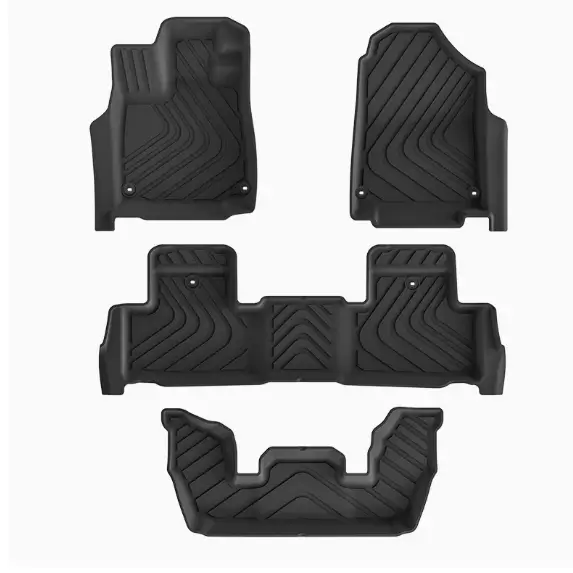
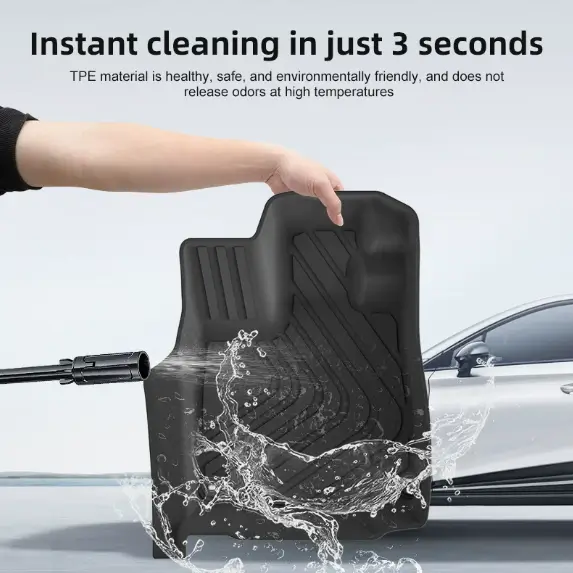
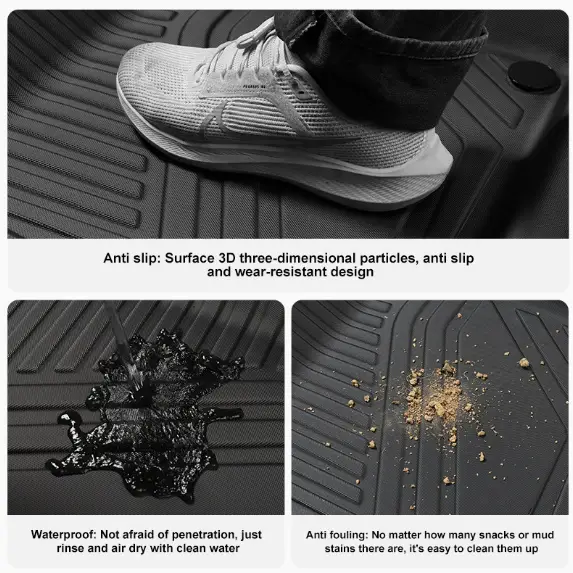
If you’re sourcing car floor mats for your automotive accessories brand, retail store, or private label program, you’ve likely encountered TPE as a material option. But what exactly is TPE, and does it live up to its reputation? This guide breaks down the technical properties, advantages, limitations, and B2B sourcing considerations — so you can make a confident purchasing decision.
What Is TPE Material for Car Floor Mats?
TPE stands for Thermoplastic Elastomer — a class of copolymers that combine the elasticity of rubber with the processability of thermoplastics. Unlike vulcanized rubber, TPE can be remelted and reshaped, making it recyclable and easier to manufacture with consistent quality.
For car floor mats specifically, TPE is typically produced in a closed-cell foam or solid sheet form, with anti-slip textures molded directly into the surface. The material does not require chemical cross-linking agents, which is why it has virtually no odor and contains no toxic plasticizers.
Learn more about our TPE car floor mat product range →
Key Physical Properties of TPE
| Property | TPE | Rubber | PVC |
|---|---|---|---|
| Odor (new) | ✓ Odorless | ✗ Strong smell | ✗ Chemical smell |
| Temperature stability | ✓ -40°C ~ +120°C | ✓ Wide range | ✗ Cracks in cold |
| Waterproof | ✓ Excellent | ✓ Good | ✓ Good |
| Recyclable | ✓ 100% | ✗ Difficult | ✗ Not eco-friendly |
| Weight | ✓ Lightweight | ✗ Heavy | ~ Medium |
| EU/US market acceptance | ✓ High | ~ Declining | ✗ Restricted |
| Unit cost (FOB China) | ~ Mid-range | ✗ Higher | ✓ Low |
Interested in TPE floor mats for your brand?
Low MOQ from 50 sets · Private label · Free samples available
For most B2B buyers targeting North America, Europe, or Australia, TPE offers the best overall balance of quality, compliance, and marketability.
Disadvantages of TPE Car Floor Mats
Being transparent about trade-offs builds trust with your retail buyers. Here are the real limitations of TPE:
- Higher cost than PVC/XPE: TPE raw material is more expensive. Expect FOB pricing roughly 20–40% higher than PVC equivalents. This is offset by premium retail positioning and better end-consumer reviews.
- Less rigid than hard rubber: TPE mats can feel flexible when lifted. Some buyers prefer the “solid” feel of thick rubber mats, particularly in the heavy-duty truck segment.
- Surface can attract fine dust: The slightly soft surface texture collects fine dust more than hard PVC in dry climates. Easily cleaned with a damp cloth — not a significant complaint in wet/muddy climates.
- Not all “TPE” is equal: Lower-grade TPE blends with excessive calcium carbonate filler exist in the market. Always request material certifications (REACH, RoHS, CARB) from your supplier before placing orders.
Can TPE Car Mats Withstand Extreme Temperatures?
This is one of the most common questions from buyers in Canada, Scandinavia, the Middle East, and Australia — markets with significant seasonal temperature swings.
| Scenario | Temperature | TPE Performance |
|---|---|---|
| Canadian winter (parked outdoors) | -40°C | Remains flexible, no cracking or brittleness |
| Closed car in summer (interior) | +80°C ~ +100°C | Stable, no deformation or off-gassing |
| Middle East summer (direct sun exposure) | +70°C ~ +90°C | No warping, no odor release |
| Australian UV exposure | High UV index year-round | UV stabilizer additive recommended for prolonged direct sunlight |
Our TPE car floor mats use a closed-cell compound with a service temperature range of -40°C to +120°C, exceeding the demands of virtually all automotive use environments.
How Long Do TPE Car Floor Mats Last?
Under normal use conditions (daily driver, regular cleaning), high-quality TPE floor mats have a functional lifespan of 5–8 years. Key factors affecting longevity:
- TPE compound grade (virgin material vs. recycled blend)
- Mat thickness — recommend ≥5mm for driver’s mat
- UV stabilizer additive inclusion
- Cleaning method (avoid petroleum-based solvents)
- Anti-slip backing quality (rubber nibs vs. full-coverage backing)
For reference, WeatherTech — the leading premium mat brand in North America — uses a proprietary TPE-based compound and offers a limited lifetime warranty. This is a strong signal of the material’s durability credentials and helps justify the premium pricing in retail markets.
What Material Does WeatherTech Use for Their Floor Mats?
WeatherTech FloorLiners use a proprietary high-density tri-extruded material (HDTE) that is TPE-based. They do not use PVC or traditional rubber for their flagship liner product line. This is a useful reference when positioning TPE mats to buyers who benchmark against WeatherTech.
The leading WeatherTech alternatives — Husky Liners, 3D MAXpider (Kagu series), and Lund — all also use TPE or XPE compounds in their premium product tiers.
Frequently Asked Questions
Are TPE mats safe for passengers, including children?
Yes. TPE does not contain phthalates, BPA, heavy metals, or chlorine compounds. It complies with EU REACH regulations and California Proposition 65 when properly formulated. Always request test reports and material safety data sheets (MSDS) from your supplier before importing.
How do I clean TPE car mats?
Remove mats from the vehicle, shake off loose debris, rinse with water or a mild soap solution, scrub with a soft-bristle brush, and air dry. Do not use petroleum-based solvents, acetone, or bleach — these can degrade the TPE compound over time and are important points to include in your product care instructions.
Do TPE car mats smell when new?
High-quality TPE mats have minimal to no odor straight from the packaging. If a mat marketed as “TPE” has a noticeable chemical smell, it likely contains a high proportion of calcium carbonate filler or PVC blending — a reliable quality indicator to communicate in your product listings and sales process.
Is TPE or XPE better for car mats?
TPE is denser, more durable, and better suited for precision-molded full-coverage liners. XPE (cross-linked polyethylene foam) is lighter and lower cost but less durable under heavy foot traffic and has shorter lifespan. For premium retail markets in North America and Europe, TPE is the preferred choice. For budget-tier markets in Southeast Asia or Latin America, XPE can be appropriate.
What are the top-rated car floor mat materials overall?
For the North American and European premium aftermarket, TPE is widely considered the leading material. It balances durability, safety compliance, consumer perception, and recyclability better than any competing option at scale. For the budget segment, XPE remains viable. Rubber maintains a presence in commercial and heavy-duty vehicle applications.
Does WeatherTech use TPE material?
Yes — WeatherTech’s FloorLiners are made from a proprietary TPE-based compound they call HDTE (High-Density Tri-Extruded material). Their product success is a strong market validation of TPE’s performance credentials for serious automotive buyers.
Ready to source TPE floor mats for your brand?
OEM & Private Label · Custom fit · Low MOQ · Free samples available · Export to 30+ countries